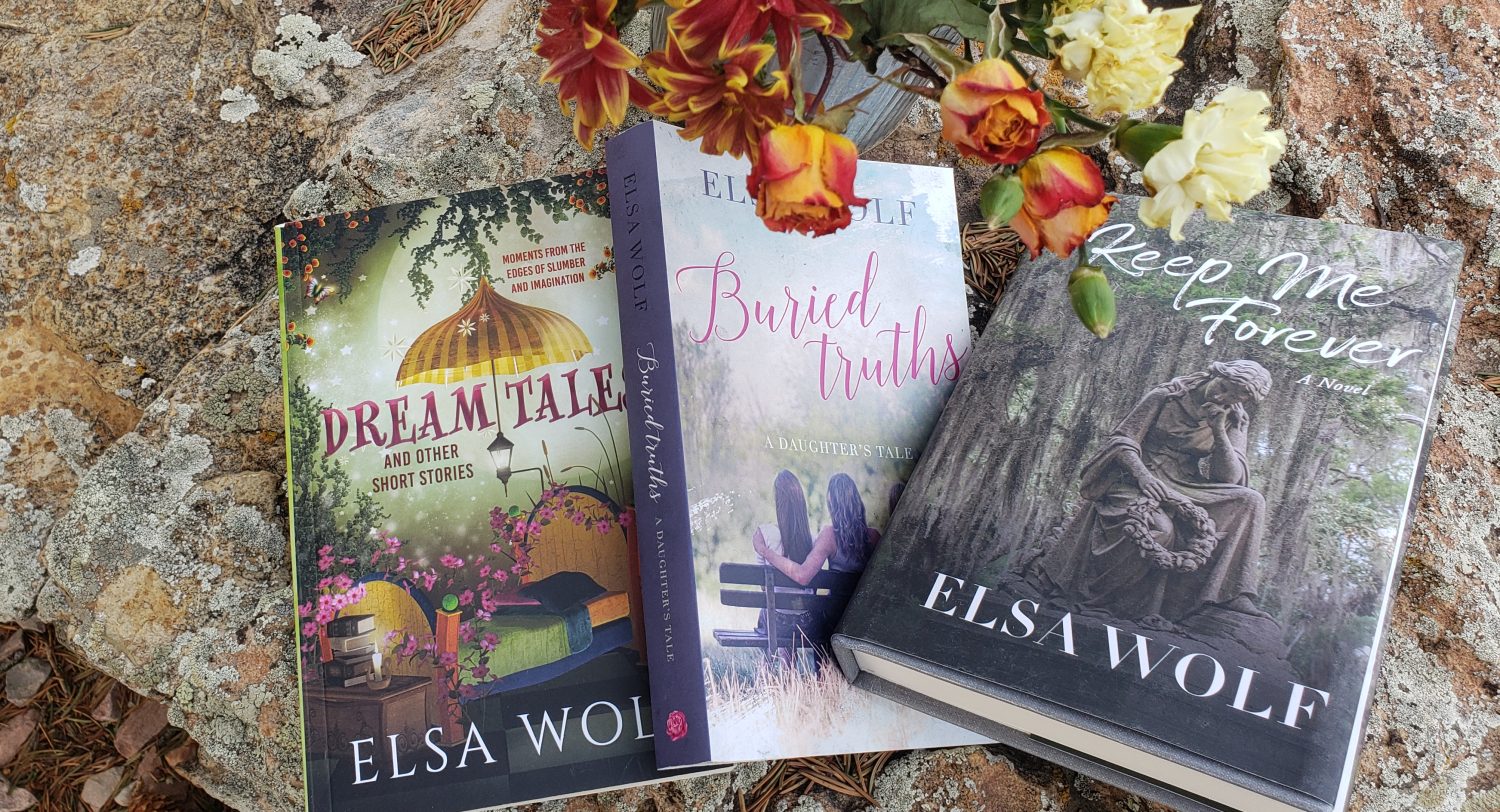
This is a variation of one of the short stories in Elsa’s published book entitled Dream Tales and Other Short Stories. We hope you enjoy the podcast created by Pip and Mara using a wordpress function. This is an Beta experiment. What do you think?
Pip: A cocktail party and a polka hall can, apparently, upend your entire sense of self.
Mara: Today we’re following a story by Elsa Wolf that moves from a stranger at a party, to a Bavarian dance hall in rural Maryland, to a revelation that reframes the whole evening. Let’s start with that night at Blob’s Park.
A Night at Blob’s Park
Pip: The setup here is deceptively ordinary — a young woman dragged to a cocktail party, a stranger with a German accent, an invitation to go dancing. But the unease is present from the first moment Heidi notices something she can’t name.
Mara: The story establishes that discomfort early. When Claus invites Heidi onto the dance floor at the Bavarian hall, she follows his lead — and the writing captures how out of place she feels: “She felt like a clumsy child, but Claus’s calm direction kept her from stumbling too badly.”
Pip: Which is doing double work, because the whole evening is Claus directing her somewhere she didn’t know she was going.
Mara: Right. The dance hall itself is rendered in real detail — wrought-iron chandeliers, a mural of the Bavarian Alps, Alpenhorns rolled out on wheels, high schoolers in traditional costumes. The place is vivid and specific, which makes Heidi’s unease feel more grounded, not less.
Pip: And then the drive home takes a turn — literally.
Mara: Claus stops in front of a shuttered stone building. Heidi reads the crooked sign: St. Francis’ Orphanage. Her instinct is fear. His explanation is something else entirely — he tells her it’s the last place he saw his baby girl, that he left her there because he couldn’t raise her alone.
Pip: And Heidi is adopted. So the math is not subtle.
Mara: The story doesn’t let the revelation land softly. Heidi’s response is immediate and sharp — “Take me home. I’ve heard enough.” When Claus finally says “I never should have left you,” she calls him crazy. The emotion is confusion and anger before it’s anything else.
Pip: What the story does well is hold off on any resolution. There’s no reconciliation scene, no tearful embrace.
Mara: Just silence on the drive back, and a final line: “neither one knowing if they would ever meet again.” The cocktail party, the dance hall, the orphanage — it’s structured as a single evening that Heidi entered as one person and left as someone with an entirely different set of questions.
Pip: A stranger at a party who already knows your name — that’s the kind of detail that earns its unease.
Mara: And the dance hall gives it room to breathe before the weight arrives. More of that tension next time.
Next time would be within the pages of Dream Tales and Other Short Stories by Elsa Wolf. This particular story is a further exploration of aspects of her first novel, Buried Truths-A Daughter’s Tale. Excerpts of this book will appear in the coming weeks. Thank you for spending time with Elsa.
Discover more from Elsa's Home
Subscribe to get the latest posts sent to your email.
