In 2016 I flew into Spain on my own from the USA and three years later in 2019 with my husband. On the first trip, I flew into Madrid and struggled through the metro system to my hotel. They kindly provided me with a room five hours before the normal check-in time. I went into the room and found a mirror. My face looked like a white sheet. The lack of sleep and the time-zone changed had taken their toll. I was quite woozy and crawled into bed for a two-hour nap. I wanted to explore Madrid when I awoke, but after fumbling about awkwardly trying to speak Spanish to acquire a meal, I had very little energy for site seeing.
The next morning, I had enough time to go to the Prado Museum in Madrid before making my way to Vigo, Spain, to meet-up with our daughter. The taxi driver wanted to talk, which I managed, but only in the present tense as I haven’t a clue how to speak Spanish in any other time frame. I meant to discuss the pilgrimage walk to Santiago from a trip years before, but he thought I was talking about a current trip. On the bright side, he did understand me.
On another day, I was on a bus with strangers and sat next to a ten-year-old boy who was also traveling alone. When I had trouble with my pull-down tray, he helped and then offered me a juice box from his backpack. I showed him my water and he declined, but later, I passed him a pack of sealed crackers. He took the packet and smiled. We did not speak the same language–I don’t know what he spoke– but we managed with gestures. A great example of strangers helping each other feel less alone. His stop came before mine. We parted with a nod and a smile.
Vigo, Spain…At my stop, I got off with only partial directions in hand. Nevertheless, I found the hotel. It turned out that my daughter had already checked-in and gone off shopping. So, I resolved to go to the room to settle in. Before I could progress in that direction, she popped into the lobby through the main door. By this time, the evening only allowed for a meal of Tapas (small plates), which I enjoyed thoroughly. I hardly remember the evening as jet-lag had officially set in. Thankfully, my daughter wasn’t in the same predicament.
We rented a manual car to go out to an archaeology site 60 kilometers away. If I recall correctly, it was called Castro de Santa Trega. The archaeology site had stairs taking us around the hills to see what remained of circular stone foundations for numerous buildings. The clouds rushed through the trees at high speed. Before dropping off the car, I needed to top-off the tank then leave the receipt with the key in the drop-box at the rental agency. When we returned the car, I had trouble dealing with a hill, tried to go in the wrong way to drop the car, didn’t put the receipt in the box. In order to get to the train on time, we had to grab a cab. Not allowing enough time for unexpected delays was a mistake. I learned that I should always factor in extra time so panic, anxiety, and mad dashes won’t ruin a good time.
PORTO, PORTUGAL 2016 — I hopped off the metro train with my daughter and stepped out into the lowly lit sidewalks to find the stones tattered and turned over by a construction crew. This first impression of Porto made me hesitate. I wanted to get back onto the metro and flee to another country. To be fair, we followed our GPS and found our way through various piles of rubble on several streets to a hotel that was not ours. The man personally directed us to The Artist Porto Hotel & Bistrô (Rua da Firmeza No 49, Bonfirm 4000-228 Porto) without hesitation.
A hospitality school that is a hotel and a restaurant. The rooms were nicely decorated and clean. I could stay again or not; it depends on my budget. However, the restaurant is a must go back for a second or third visit. Two chefs were preparing our meals. One was young; the other was on his second career. They offered us 4, 6, or 9-course meal and asked if our meal was to be meat or vegetarian. The price was 20 euros each. We added several glasses of wine along with bottled water. The total was 60euros for two people.
Port wine tour (There are many such tours but this one I chose randomly and enjoyed. It is also possible to go to little shops along the river for tastings only of other distributors). We chose a Taylor Port wine tour.
2019 — This time I went to Porto with my husband and we stayed in a lovely, updated apartment. Sadly, we started off poorly again. This ‘poorly’ took up three days. A stomach bug of some sort hit us both with a 24-hour gap in between us. The time we were going to spend in Paris was lost in the sick days in Porto. We got through and back on track. We spent time by the Douro River going to gilded churches, riding across the river on a water taxi, looking at shops, and tasting Port wine at various distributors; Dalva was among the group.
An excerpt from my husband —
We were feeling much better; now we don’t. We were eating a lovely snack, and it began to rain.
Normally, not a big deal but—our laundry was out on the line–and our apartment was at the top of town. Elsa made a break for it first while I chugged the port and paid the bill.
I took off running after Elsa up the hill to the apartment. I made it about halfway up the hill before I ran out of breath, even with Wyoming mountain blood. On my second wind, I caught up with Elsa, who had stopped racing when the rain stopped. We walked the rest of the way to the apartment to assess the damage.
The laundry damp again. Second time! We got caught by rain last night too. Clothesline nobs!
Back to Elsa —
Coimbra 2016 — We stayed at the Casas da Alegria through booking.com. The people who ran the mini-hotel were very helpful and drove us to the bus station with our luggage for no-charge; we gave them a tip instead. Once we were there, we had to wait 5 hours because the bus we wanted, sold out. We tried to phone the next hotel and told them we would be late, but the internet connection at the station would only let us email (no calls).
Coimbra itself felt like a good spot to relax. Yet, the streets are narrow and require some careful navigation among the cars. The university in town is a good place to visit to see the massive, old library. The entrance is at the top of the hill within a courtyard. A ticket is required, and the admittance is timed to avoid letting too many people in the building at once. DO NOT try and go in through the bookshop stairs, it’s the library’s exit.
2019 – Revisited the Coimbra library (referred to as the Academic Prison), but the entrance had changed to the side; maybe the bookstore entrance that was no longer a book store. I’ve learned a few new things this time. The place is more like a vault with walls almost two meters thick. The bookshelves are made of oak to deter bugs from eating the books. The bonus is the bats that live up by the ceilings to eat insects. Every night the staff covers the reading tables with leather cloths to protect them from bat droppings. Not sure who goes up to the extremely high ceilings to clean the bat mess; no one said.
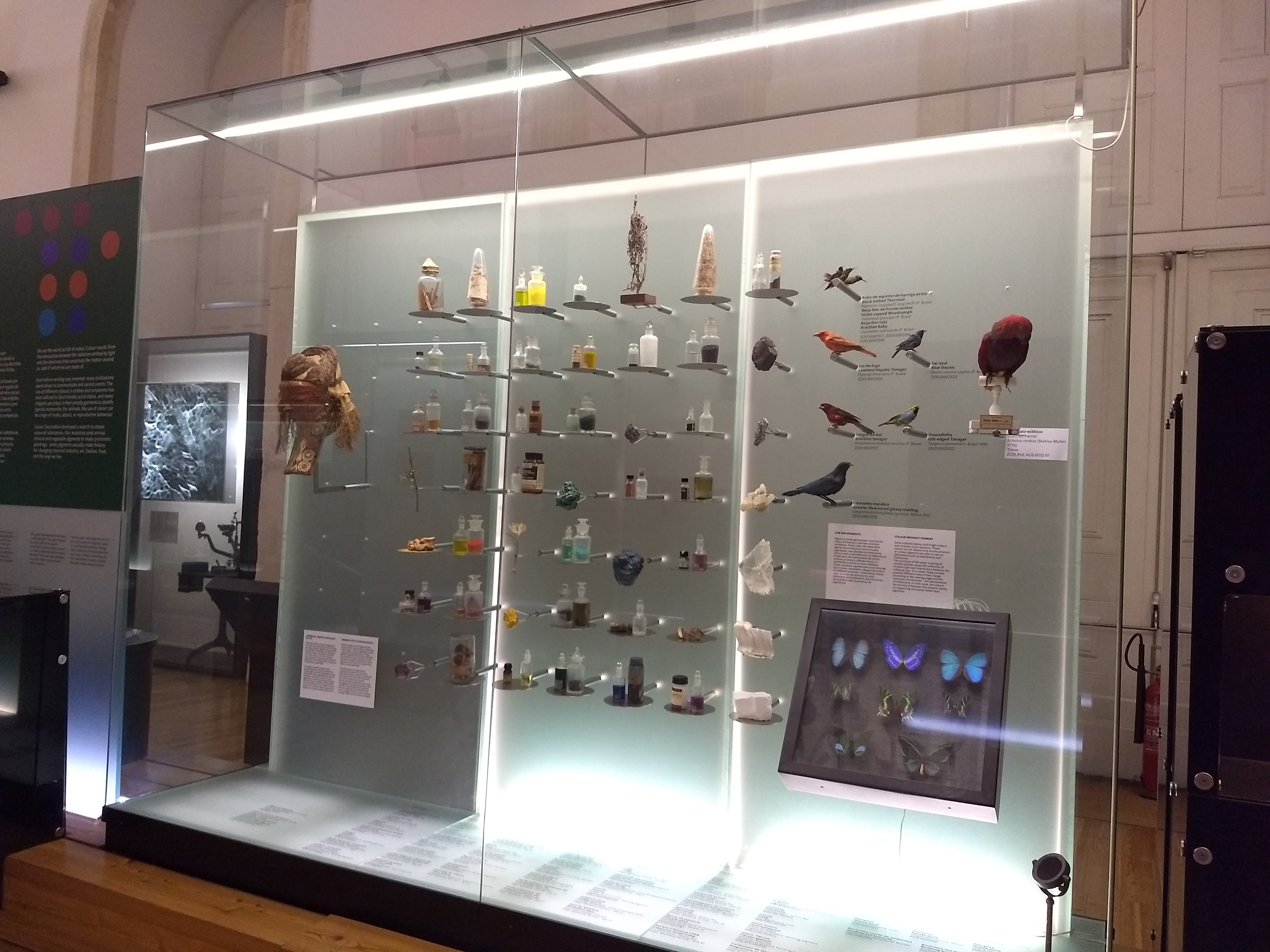
Three other locations that were attached to our library ticket that were equally, if not more, fascinating than the books we were allowed to look at for ten minutes. The museums in other buildings contain natural history (taxidermy mounts, bones, and such) as well as the evolution of electricity and the most extensive collection of scientific instruments I’d ever seen. Another housed laboratory instruments and chemicals. I was particularly interested in the components that made dyes and the numerous colorful birds. Overall there were simply too many things to mentions, although I’d like to describe them all.
Only 2016 – A train ride away we found the beach area of Piniche. We took a train and bus to get to Piniche. The bus dropped us off a block or so away from the required taxi stand. The stand was challenging to find. Once there, we waited about twenty minutes for a taxi to appear and drive us out to the beach house. The man who tended the place stayed in a converted tool shed with a bed. He only slept there when guests came to the house. After check-in, we only saw him again when he prepared breakfast. It was delicious.
The beach itself was gorgeous. I made diagrams in the sand with a long stick to help me think out my first novel. Between drawing and walking, I must have been there at least two hours while my daughter took surfboard lessons.
That evening we listened to music at a restaurant along the water’s edge.
LISBON – This city is extensive and takes some time to get used to. We found that it is wise to make reservations for dinner in advance. There are places to eat everywhere but stay away from the high tourist area down by the river as the food tastes just like tourist food. I prefer eating in places above the central train station. We chose not to get the Vira Viagen travel card for the metro and spent a lot of time walking the city instead. This choice was tricky because the streets are slippery during the wet season.
Muse da Marioneta (small but informative; worth the time) — Being able to see marionettes, puppets, and some claymation/animation all in one place was enlightening. They bridge the imaginary world into the hands of real people. They covered Thailand, Indonesia, England (Punch & Judy), France, and more. I have some French hand puppets from my parent’s time in Paris. The museum gave me some ideas on how to display the six characters I possess. Some, I was unclear as to which, of the pupi (dolls) were recognized by UNESCO as ‘a masterpiece of Oral and Intangible Heritage of Humanity,’ according to page 11 of the pamphlet provided by the www.museumdamarioneta.pt

Museum do Teatro Romano – Located in Lisbon’s Alfama district.
Padrão dos Descobrimentos –The monument is on the edge of the river. It is dedicated to the 15th to 16th century Age of Discovery when Portuguese explorers set out across the oceans to seek the New World.
As a side, but no less important comment, we visited the Botanical Garden that was magically green even though it was winter. The spring must be magnificent.
SINTRA – We took a 45-minute train from Lisbon via the Rossio Station to Sintra.

- Moors Castle and Quinta da Regaleira
- Monserrate Palace
- Jeronimos Monastery
- National Park (Pena) and Chalet of the Countess of Edla
All of the noted places are quite inspiring, so much so that aspects of the town will be in my next novel. The magic in the garden’s sparked my, and many others’ imagination. The Quinta da Regaleira is a short, easy walk from the rail station, but the other locations require either long walks up narrow, steep roads, or some kind of vehicle. The options were your own car, a city tour bus, or an open-air motorized cart called a tuk-tuk (auto rickshaw). Before going anywhere, our go to eating spot is called Café Saudade with numerous nooks and crannies to settle down into that the servers have to maneuver through to even find you. If you are so inclined, you can get involved with horses in Sintra.
Here is our latest trip in 2024 (some repeats from other trips are included; no editing done)
Portugal – 2024
January temperature is 50 to 60 degrees
SINTRA –
- Sintra Marmoris Camelia 3pm check-in, Noon is the latest check-out time. Pay $8.60 at property. DRIVE from the airport on ‘welcome pickup’. They had a sign with our name, but they also had a picture of us to go by along with flight info. In the past, we went to the ROSSIO STATION (top floor) and took a 45-minute train. Approximately 45-minutes from Lisbon on Rossio Station line.
- Quinta da Regaleira
- Moors Castle (done, don’t need to repeat)
- Monserrate Palace
- Jeronimos Monastery
- National Park (Pena) and Chalet of the Countess of Edla
- Bucaco National Forest
Bus 434 from train station. Goes up the hill. Best price. Better than walking up to the Pena on the steep incline for an hour. The bus has 6 stops and goes in a loop. 24-hour ticket.
Bus 1253 – Cabo da Roca (40-minutes each way; 150 m cliff and the westernmost point of mainland Europe. The monument, the lighthouse and a gift shop are there. along with the view of Cabo da Roca.
Bus – 417 to Cascais (takes a day to explore). Southern coast below Sintra. Portuguese riviera.
LISBON (517K ppl.)
Used local tram to get around (didn’t, just walked)
FOOD –
Use ‘open table’ for reservations OR went to the restaurant’s website.
This city is extensive and takes some time to get used to. On our last trip, we found that it is wise to make reservations for dinner in advance. There are places to eat everywhere but we stayed away from the high tourist area down by the river. We prefer eating in places above the central train station
Best Nata’s at Fabrica da Nata Address; Praca dos Restauradores, 62-68
Restaurante Cervejaria Pinoquio (seafood; located above the train station) Praça dos Restauradores 79 80, 1250-188 Lisboa, Portugal
Praça dos Restauradores 79 80, 1250-188 Lisboa, Portugal
Restaurante Figus Praca da Figueira 17, Lisbon 1100-241
Dali CozinhaRua de Infantaria 16, número 43, Campo de Ourique, 1250-128
Maria Catita (near our hotel in Alfama area) Rua dos Bacalhoeiros, 30, Lisbon, Portugal
SITES
Two half-day tours. One; overall Lisbon. Two; Alfama area
Aquarium- Oceanario del Lisboa. 8,000 sea creatures from 4 ocean habitats. Address – Esplanada D. Carlos I1990-005 Lisboa
Museu Nacional do Azulejo (tile museum)
Belem Tower is located along the northern bank of the Tagus River. It offers stunning views of Lisbon city and the Tagus River and is situated near other monuments — the Jerónimos Monastery and the Padrão dos Descobrimentos. The tower served as a ceremonial gateway to ships coming from overseas and was also once a lighthouse. ADDRESS Av. Brasília, 1400-038 Lisboa
Arco do Triunfo – An arch commemorating the rebuilding of Lisbon after the 1755 earthquake that destroyed the city.
National Museum of Ancient Art
Southern Portugal
- Seven Hanging Valley Walk
- Start/End: Praia da Marinha to Praia Vale de Centeanes
- Length: 11.9km (out and back) CAN enter in/out at different junctures to shorten. ‘turn-back point’ at Praia da Marinha
- Time to complete: 4 hrs (plus time for stops along the way!)
- Difficulty: Moderate
Beaches; Praia da Gale 1.2km from center of Vale Rabelho
Golden Coast, 1,929 miles
Near-by towns of the Algarve region
- Albufeira (16K ppl, but more during tourist season), Lagos (19K ppl), Vilamoura, Carvoeiro, Portimao, Ravira
- Algarve LIVE science center
- Pousada Palacio de Estoi (10k drive)
- Roman ruins of Milreau
- UNESCO; Batalha, Alcobaca, Tomar
- Fatima (VERY unusual religious pilgrimage spot – people crawled on their knees down a path to get to the worshiping altar).
NOTES from 2016
PORTO, PORTUGAL 2016 (250K ppl.) The Artist Porto Hotel & Bistrô (Rua da Firmeza No 49, Bonfirm 4000-228 Porto) without hesitation. They offered us 4, 6, or 9-course meal and asked if our meal was to be meat or vegetarian. The price was 20euros each. We added several glasses of wine along with bottled water. The total was 60euros for two people.
Port wine tour (There are many such tours but this one I chose randomly and enjoyed. It is also possible to go to little shops along the river for tastings only of other distributors). We chose a Taylor Port wine tour. We spent time by the Douro River going to gilded churches, riding across the river on a water taxi, looking at shops, and tasting Port wine at various distributors; Dalva was amongst the group. Lello Bookshop (tickets were required, but we missed)
Coimbra 2016 — We stayed at the Casas da Alegria through booking.com. The people who ran the mini-hotel were very helpful and drove us to the bus station with our luggage for no-charge; we gave them a tip instead. Once we were there, we had to wait 5 hours because the bus we wanted, sold out. We tried to phone the next hotel and told them we would be late, but the internet connection at the station would only let us email (no calls).
Old library (referred to as the Academic Prison). The entrance is at the top of the hill within a courtyard. A ticket is required, and the admittance is timed to avoid letting too many people in the building at once. The place is more like a vault with walls almost two meters thick. The bookshelves are made of oak to deter bugs from eating the books. The bonus is the bats that live up by the ceilings to eat insects. Every night the staff covers the reading tables with leather cloths to protect them from bat droppings. Not sure who goes up to the extremely high ceilings to clean the bat mess; no one said.
The museums in other buildings contain natural history (taxidermy mounts, bones, and such) as well as the evolution of electricity and the most extensive collection of scientific instruments I’d ever seen. Another housed laboratory instruments and chemicals. I was particularly interested in the components that made dyes and the numerous colorful birds.
A train ride away we found the beach area of Piniche. We took a train and bus to get to Piniche. The bus dropped us off a block or so away from the required taxi stand. The stand was challenging to find. Once there, we waited about twenty minutes for a taxi to appear and drive us out to the beach house. The beach itself was gorgeous. That evening we listened to music at a restaurant along the water’s edge.
Muse da Marioneta (small but informative; worth the time) — Being able to see marionettes, puppets, and some Claymation/animation all in one place was enlightening. Some, I was unclear as to which, of the pupi (dolls) were recognized by UNESCO as ‘a masterpiece of Oral and Intangible Heritage of Humanity.
Museum do Teatro Romano – located in Lisbon’s Alfama district. The Roman Theatre Museum works as a cultural space to promote the ruins from 57 AD.
Padrão dos Descobrimentos –The monument is on the edge of the river. It is dedicated to the 15th to 16th century Age of Discovery when Portuguese explorers set out across the oceans to seek the New World. The monument was designed by José Ângelo Cottinelli Telmo and created by Leopoldo de Almeida in 1939 as a temporary attraction for the Portuguese World Fair of 1940.
As a side, but no less important, we visited the Botanical Garden that was magically green even though it was winter. The spring must be magnificent.
Discover more from Elsa's Home
Subscribe to get the latest posts sent to your email.

fascinating post
LikeLiked by 1 person
So cool you went to the Puppets museum, it’s one of my favorite places 🙂 and also i think you had a wonderful time around my country 🙂 anyway, there’s still lot to see eheh cheers from Lisbon, PedroL
LikeLiked by 1 person